
Before Coating
- Patched laps cracking open
- Screws loose under old patches
- Rust spreading from lap edges
- Several repair products at one joint
- Loose boots where pipes pass through
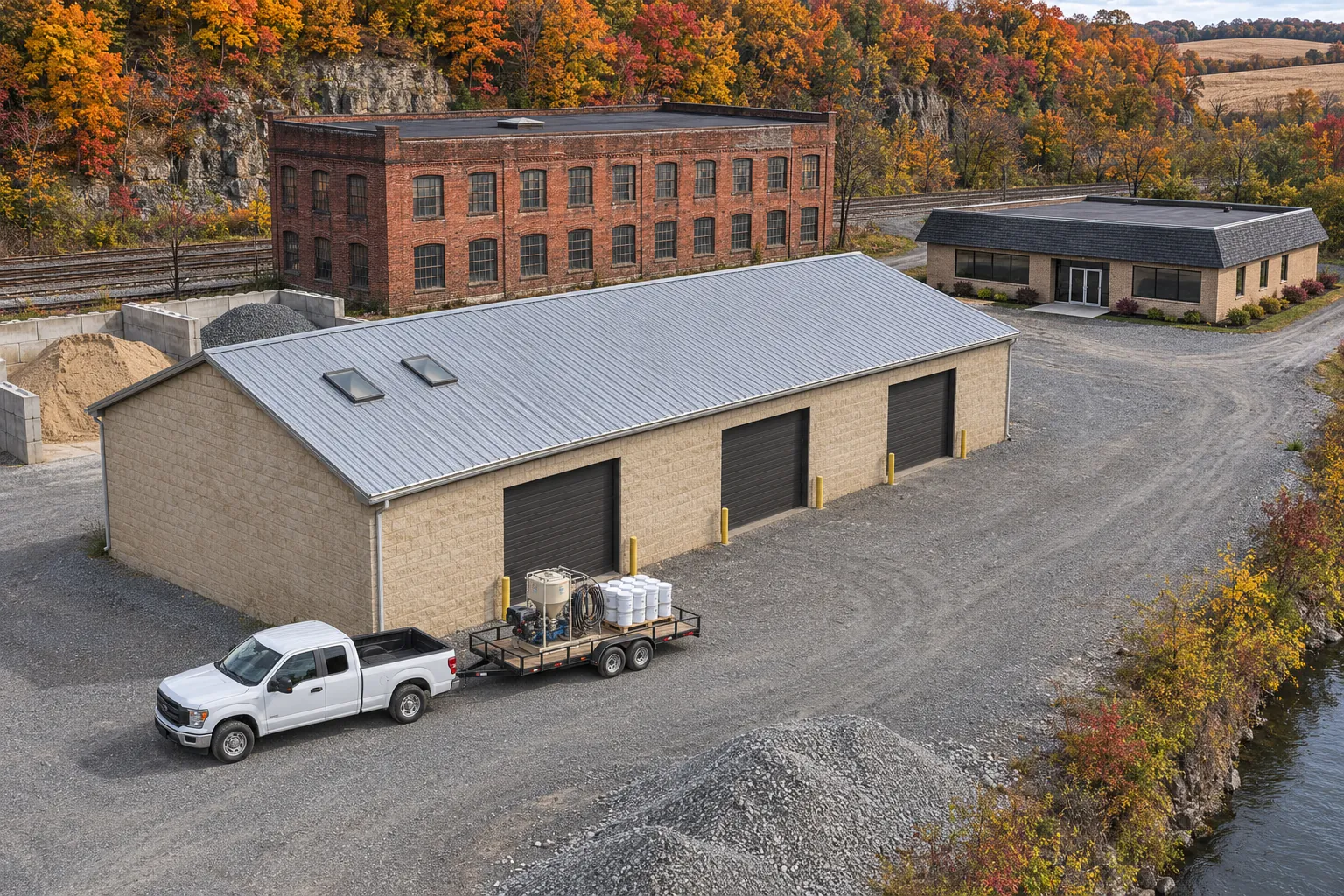
Folcroft metal roof coating on equipment buildings starts at the repaired laps. We check each patch for movement, then coat a steady roof.
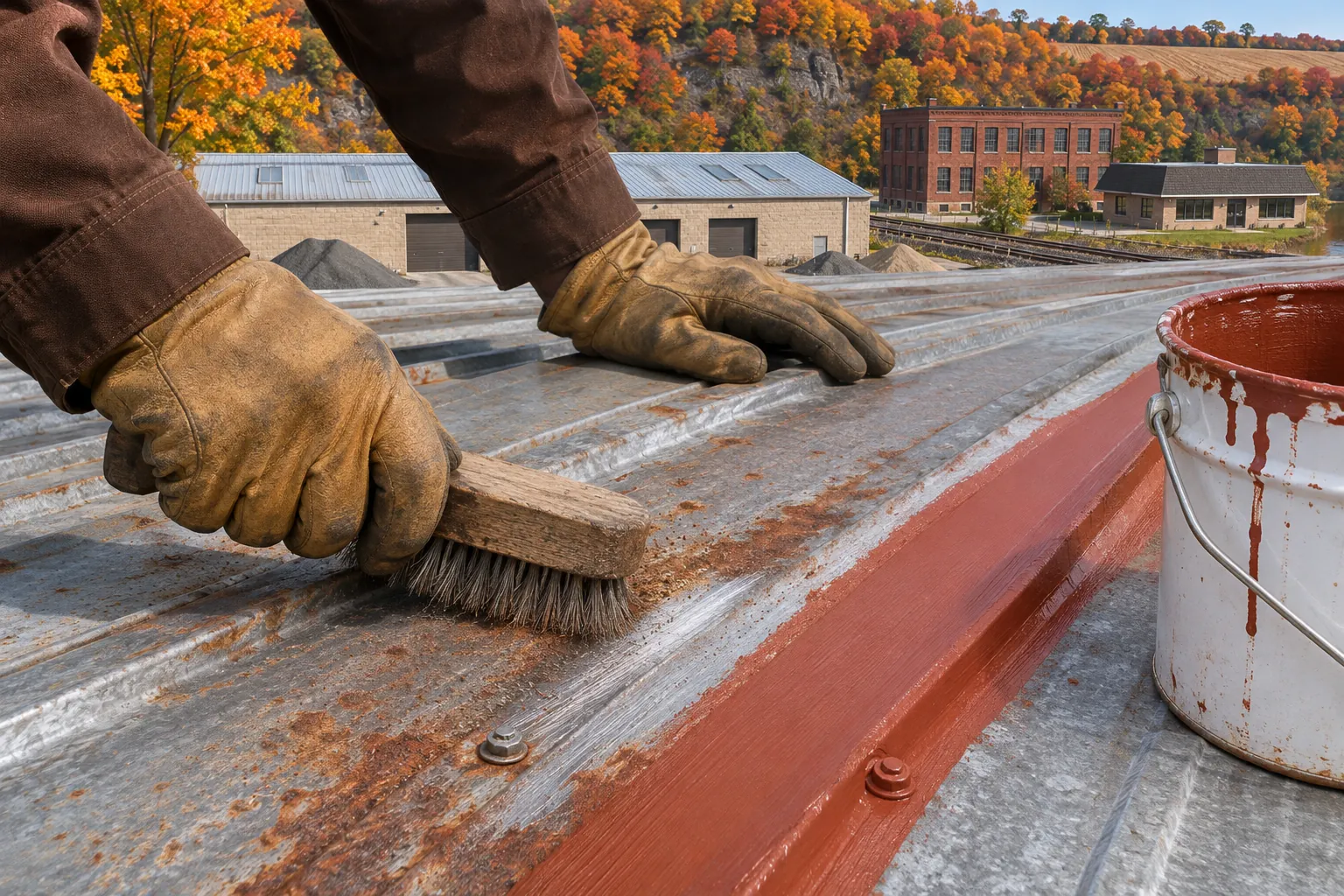
Folcroft metal roof coating on equipment buildings usually starts with laps that someone has already patched. A patch that still moves will split any coating laid over it, even on a roof that is otherwise ready.
We check each repaired lap for movement, attachment, and the finish around it, then decide which ones stay and which get redone. Coating goes on once every lap holds still, and the stitched laps get reinforced seam work so they keep holding as the panels move through the seasons.
Patched laps fail in a few ways. These five come up most on equipment buildings.
Panels keep moving under a stiff patch until it splits down the middle.
We stitch the lap tight first, then redo the patch with flexible seam material.
Patching over backed-out screws traps movement underneath.
Patch material over screws gets cut back so each one can be replaced.
Water creeping past a failed patch keeps the overlap wet.
Laps are opened, brushed, primed, and resealed before coating crosses them.
Machinery inside or on the roof shakes panels and loosens laps faster.
Extra stitch screws and flexible detailing go where vibration is strongest.
Different repair products layered at the same joint stop bonding to each other.
Old material is removed and the lap redone with one compatible system.
Pipes and conduits run through panels near laps and loosen their boots.
Boots and collars get replaced and sealed before coating ties the lap and penetration together.
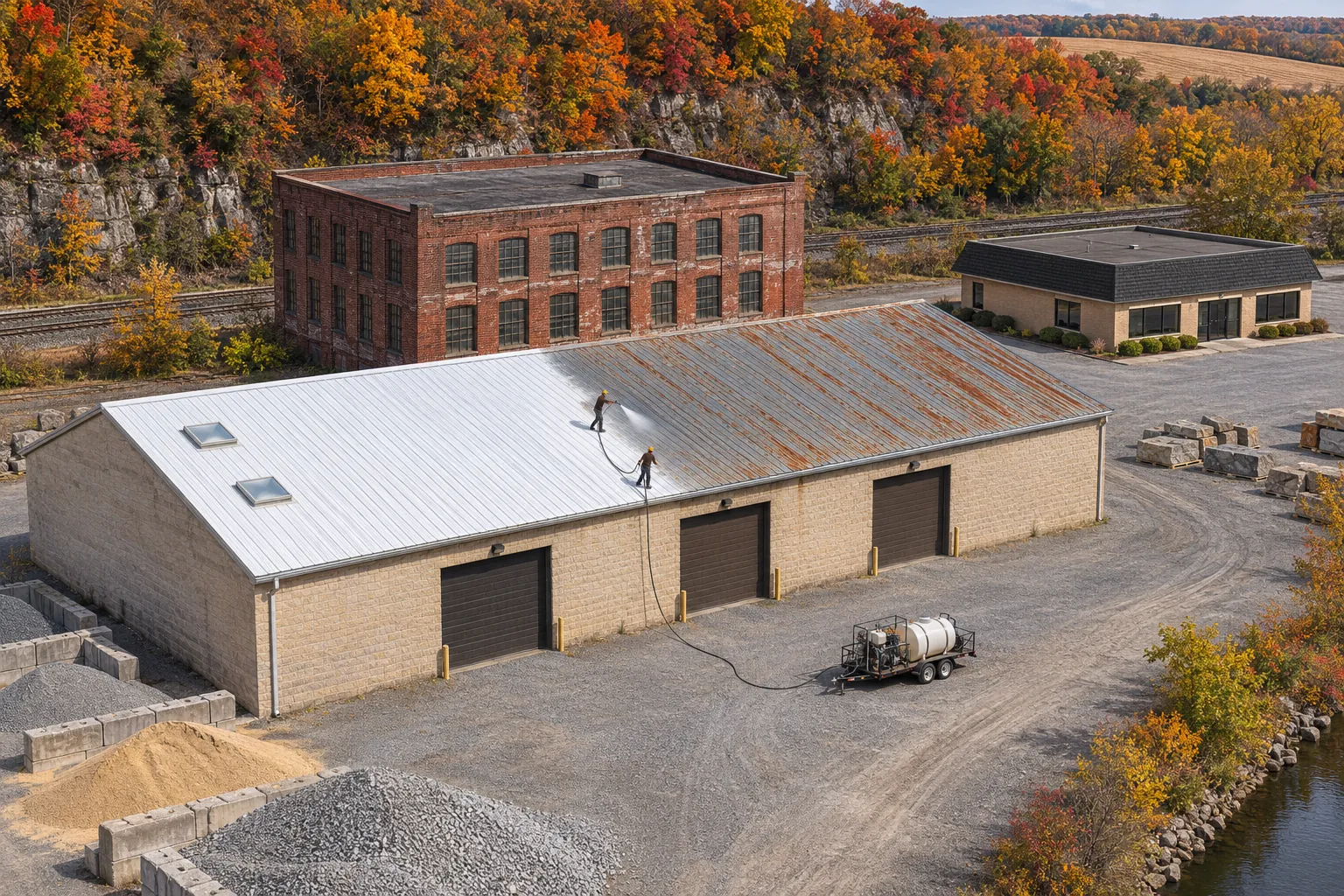
An equipment building roof in Folcroft before lap work and coating, then after.
Equipment buildings in Folcroft with patched laps usually take one of these routes.
| Option | Goes Over | Build | Plan Around |
|---|---|---|---|
| Lap rework and full coat | Roofs with several failed patches | Stitching, seam tape, two coats | Lap-by-lap testing |
| Reinforced acrylic system | Sloped panels near machinery | Fabric at laps, base and topcoat | Dry weather |
| Silicone over prepared laps | Low-slope equipment sheds | Seam work, primer, silicone | Silicone-only recoats |
| Lap repairs only | Firm roofs leaking at a few laps | Local seam work | Field left uncoated |
Call and tell us which laps were repaired and whether they leak now. We will check them before planning a coating.
Five steps, beginning with every repaired lap.
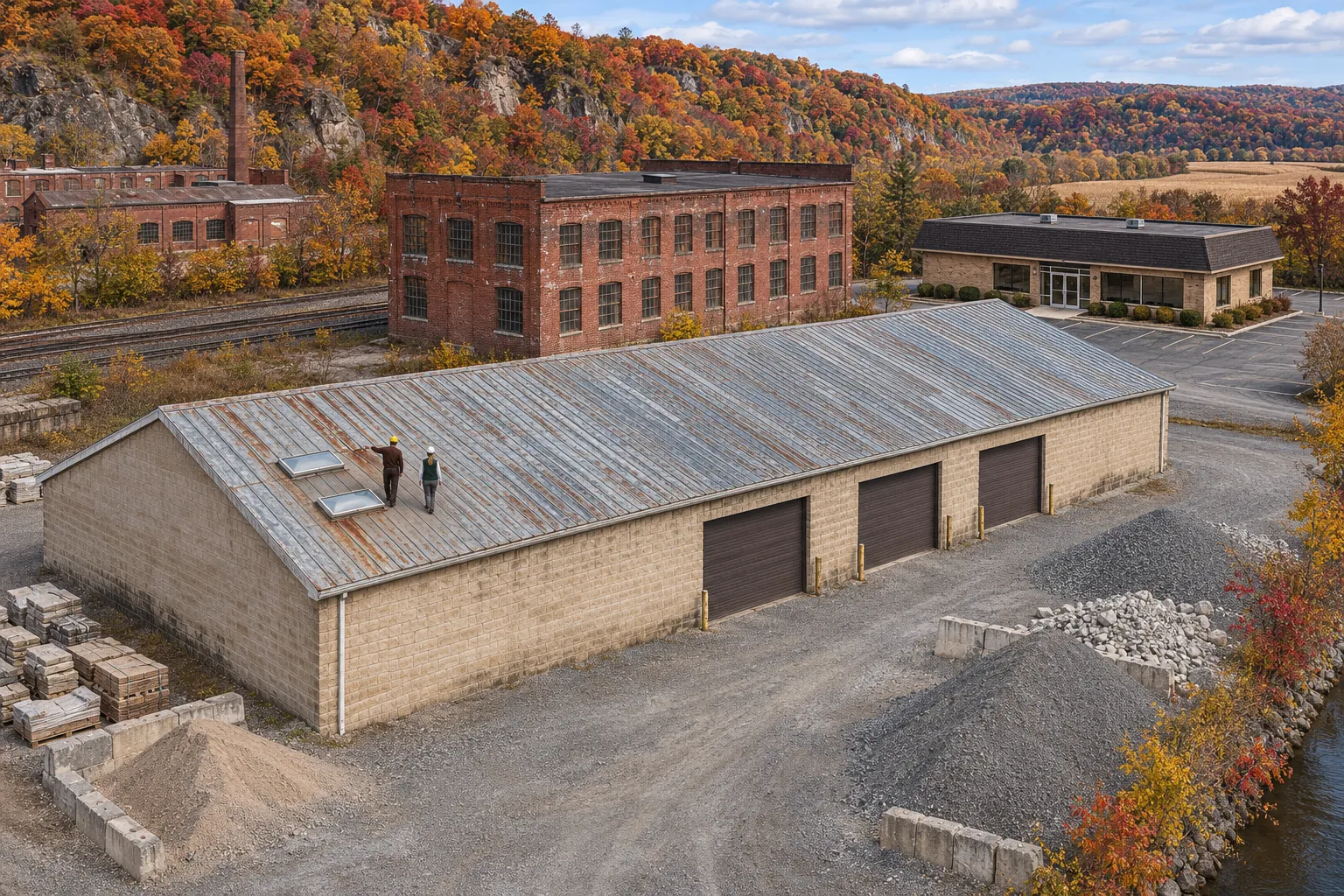
All laps, patches, screws, and the finish around them get checked by hand, with movement noted at each repair.
Stitch screws pull laps together, and screws under old patches are found and replaced.
Patches that move or crack come off, and those laps get flexible seam material instead.
The roof is washed, rust at lap edges brushed and primed, and the surface left to dry.
Base and top coats go over the field at measured thickness once every lap holds still.
Folcroft rounds out the five towns where we take metal roof coating work beyond Easton. Not listed? Call us or send us a message.
Warehouse roofs with mixed old finishes, tested first.
Low spots traced to their cause before silicone.
Exhaust residue cleaned from vents before coating.
Peeling coating opened up to find hidden rust.
Question about your own roof?
Call UsYes, if the repaired laps hold still and suit the chosen system. We check their movement, attachment, and the finish around them before setting the application details. A patch that keeps shifting can undermine coating laid over an otherwise ready roof, so unstable ones get redone.
Expect planning figures of about $2.50 to $4.00 per square foot of roof for coating, and about $5 to $8 to replace it. Lap rework, screw replacement, rust at lap edges, and coating build move a Folcroft roof within that span, and the count of moving laps matters most.
From us. Folcroft is one of the five towns we serve beyond Easton, and roof walks there follow the same steps: every lap, screw, and patch gets checked before we suggest a coating.
Yes. Call the number above to set up a roof walk on your equipment building.
Cracked sealant, shiny wear marks at screws, and gaps that open when someone steps beside the lap all show movement. We press and watch each repaired lap and check the screws along it by hand, then mark every moving lap on the roof sketch for rework.
Stitch screws first, then flexible seam tape or fabric set in coating. That combination moves with the panels instead of cracking the way stiff patching does, and it ties into the field coating as one surface.
Mostly no. Work near rooftop units or vents is timed with short shutdowns, and the rest goes on around normal operation. Machinery inside keeps running while laps and panels away from it are prepared.
Tell us which laps have been repaired before. We check every one and coat once the roof holds still.