
If Your Roof
Shingles Lie Flat With Granules Left
Attached shingles with flashing in good order can take a coating the makers support.
Start WithShingle Roof Coating
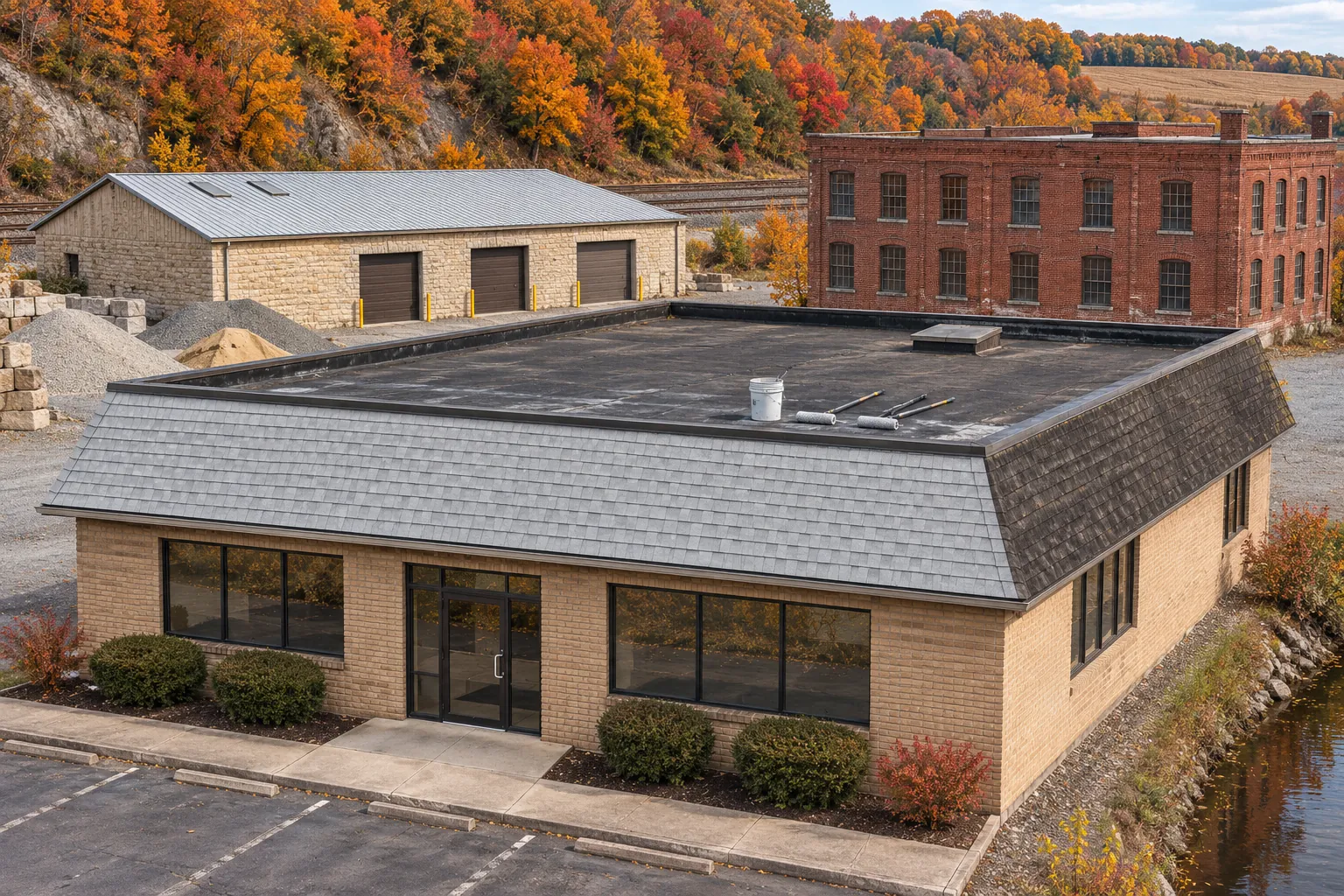
Easton shingle roof coating starts with a close look at the shingles. We coat only where they lie flat and both product makers support it.
Easton shingle roof coating fits a narrow set of roofs. These four cases show where we start instead.
Attached shingles with flashing in good order can take a coating the makers support.
Those repairs get checked for condition and compatibility before any coating is proposed.
The flat section usually takes a different coating suited to low slope.
Brittle shingles need replacing, and coating would cover a roof that is already failing.
Shingle coating only makes sense on shingles that still work. These checks decide it.
Products made for metal or membranes can trap moisture or void shingle warranties.
We look for explicit guidance from both the shingle and the coating maker before choosing anything.
Cracks, granule loss, and lifted tabs show the covering is near the end.
Shingles get checked tab by tab, and failing areas are flagged for repair or replacement.
Heat and moisture trapped under shingles age them from below.
Vents and intake openings get reviewed, since coating leaves that problem in place.
Halls and sanctuaries often carry decades of patches at valleys and walls.
Each repair gets checked for condition, and flashing at walls and valleys is fixed first.
Flashing at valleys, chimneys, and wall joints fails before the shingle field.
Flashing gets replaced or resealed before any coating decision.
Wind breaks the seal strip under older tabs and lets them flap until they crease.
Lifted tabs are hand-sealed or replaced, and creased ones are swapped before coating.
These are the paths a commercial shingle roof usually takes after our walk.
| Option | Goes Over | Build | Plan Around |
|---|---|---|---|
| Supported shingle coating | Flat, attached shingles | Clean, prime, and coat | Both makers approve it |
| Repairs only | Leaks at flashing or valleys | Flashing and spot shingle work | Field left as is |
| Mixed approach | Shingle mansard with flat roof | Separate system on each part | Transition detail |
| Replacement | Brittle or curling shingles | New covering | Permit and schedule |
What a commercial shingle section looks like before supported coating work and after it.
Call with the building type and the age of the shingles if you know it. We will tell you whether coating, repair, or replacement fits.
Five steps, with a firm decision point after the inspection.
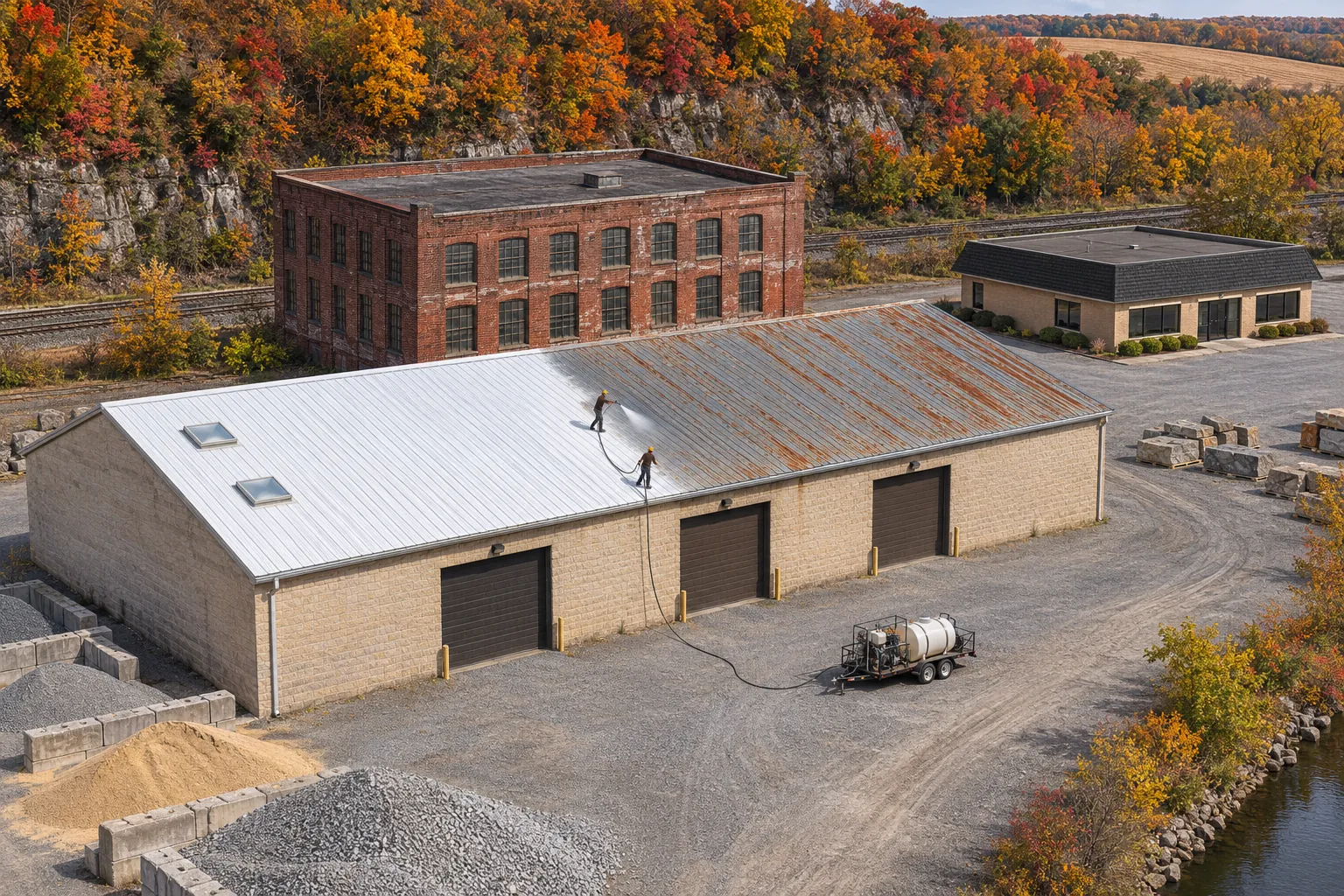
Shingles, flashing, valleys, and vents get checked up close, and the shingle and coating product guidance is confirmed in writing.
Wall and valley flashing is repaired, lifted tabs are fastened, and damaged shingles are swapped out.
Loose granules and dirt come off without scrubbing away the good surface.
Primer goes on only where the coating maker calls for it on asphalt shingles, and it dries fully before the coating starts.
The approved coating goes on at the specified rate, with edges and flashing detailed by hand.
Shingle sections often sit beside metal or flat roofs. These systems cover those parts.
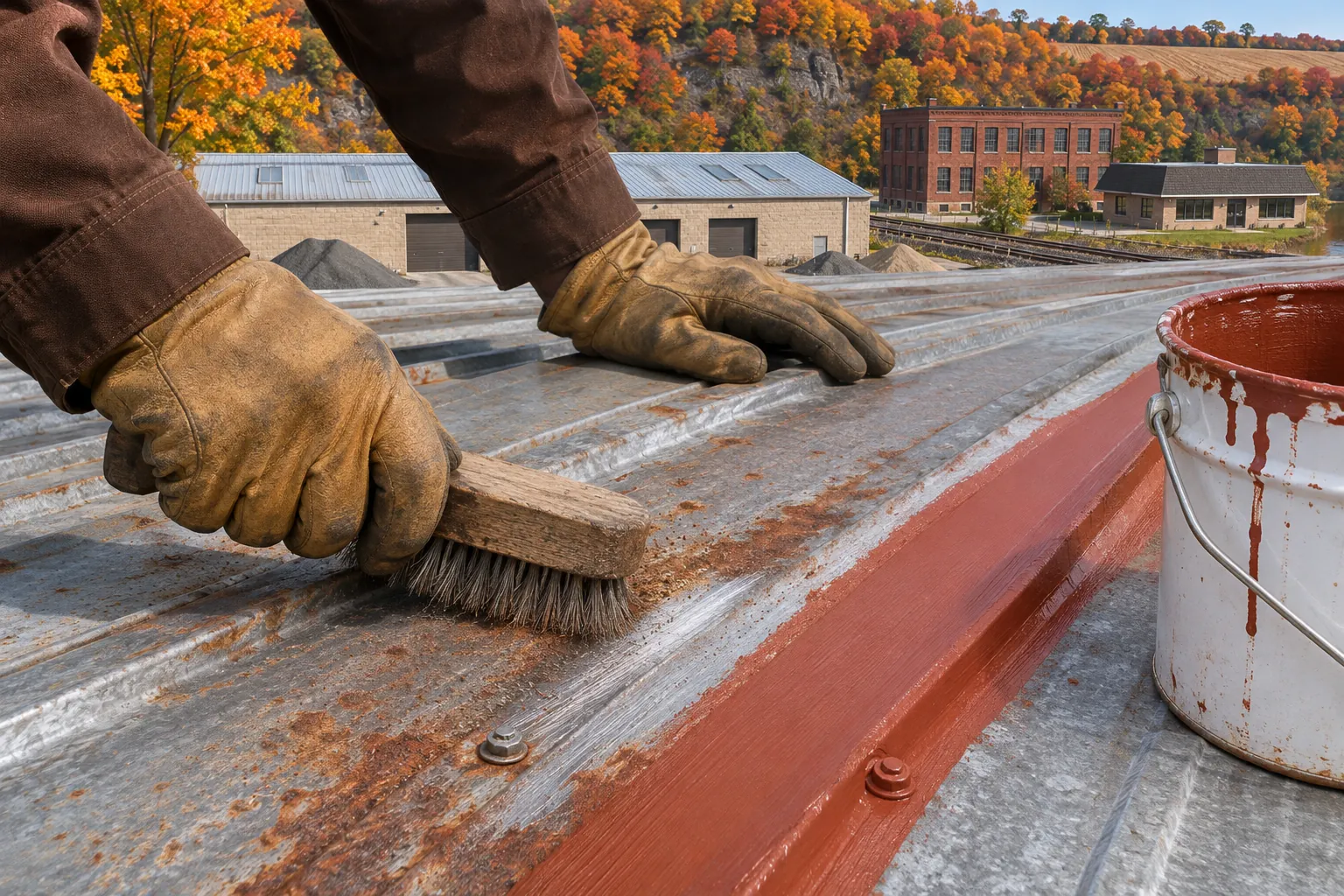
Screws sealed, laps stitched, rust primed, then two full coats.
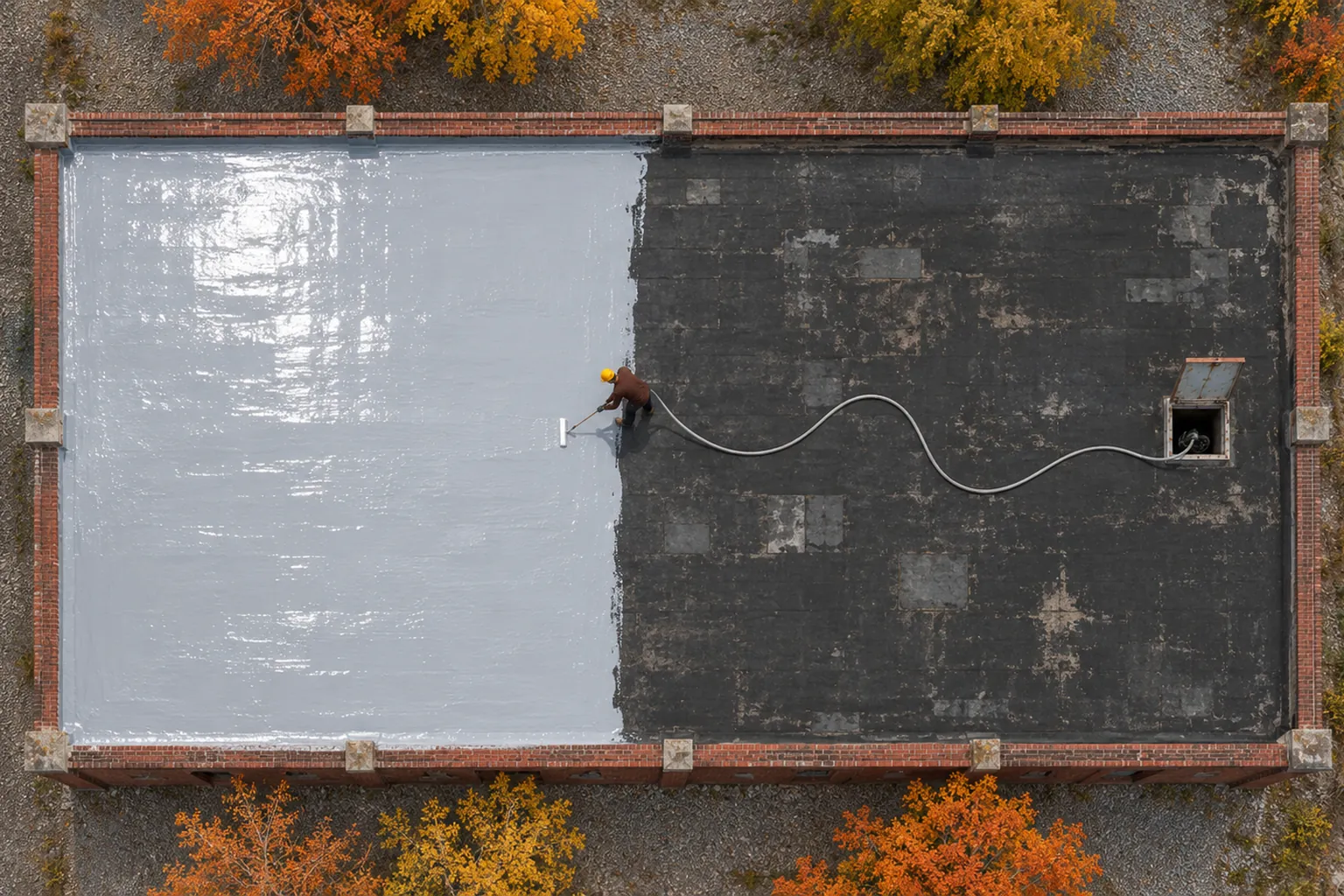
Moisture-tolerant coating for low-slope roofs after drainage checks.
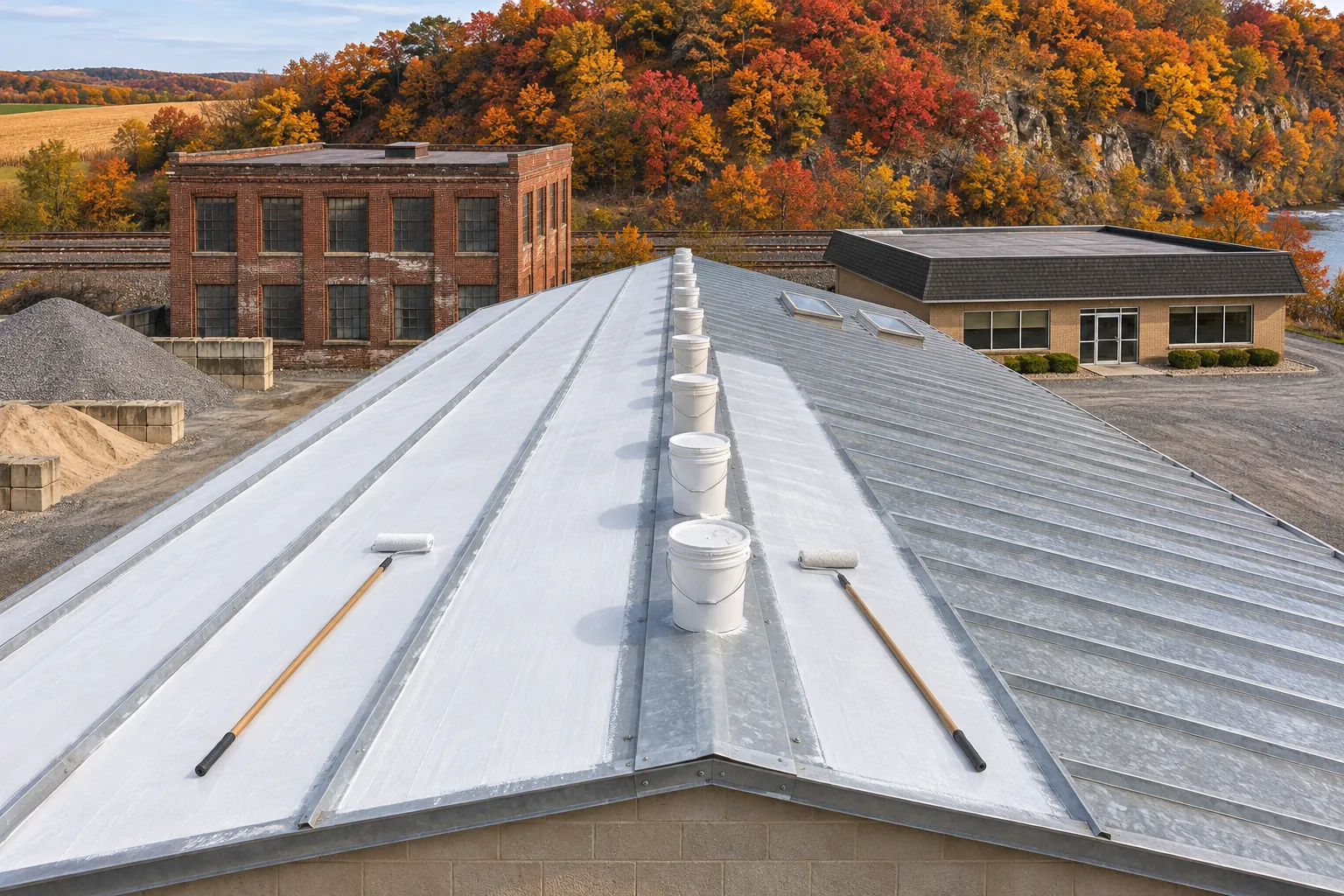
Water-based coats for sloped panels in warm, dry windows.
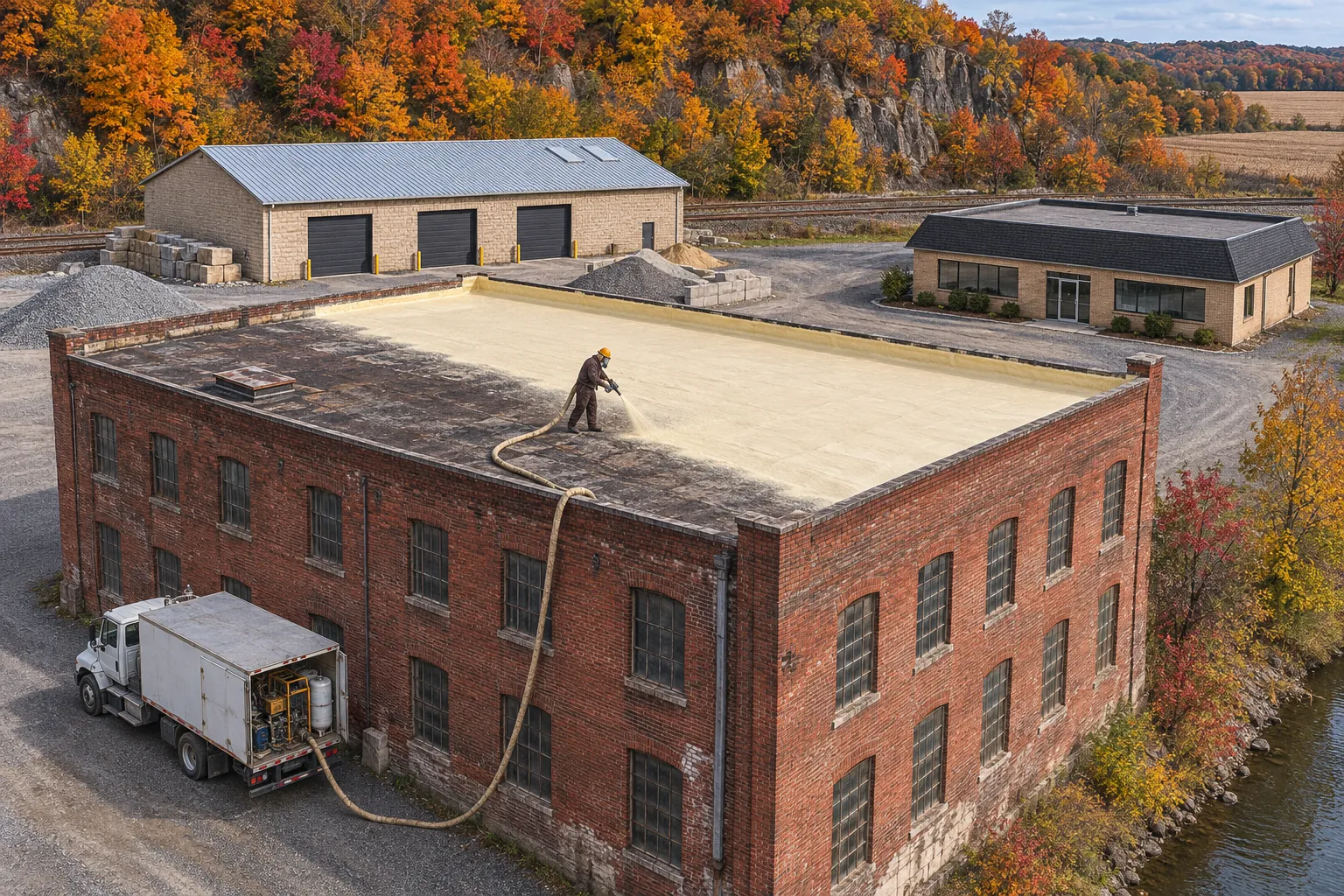
Insulating foam and a topcoat over a dry, attached deck.
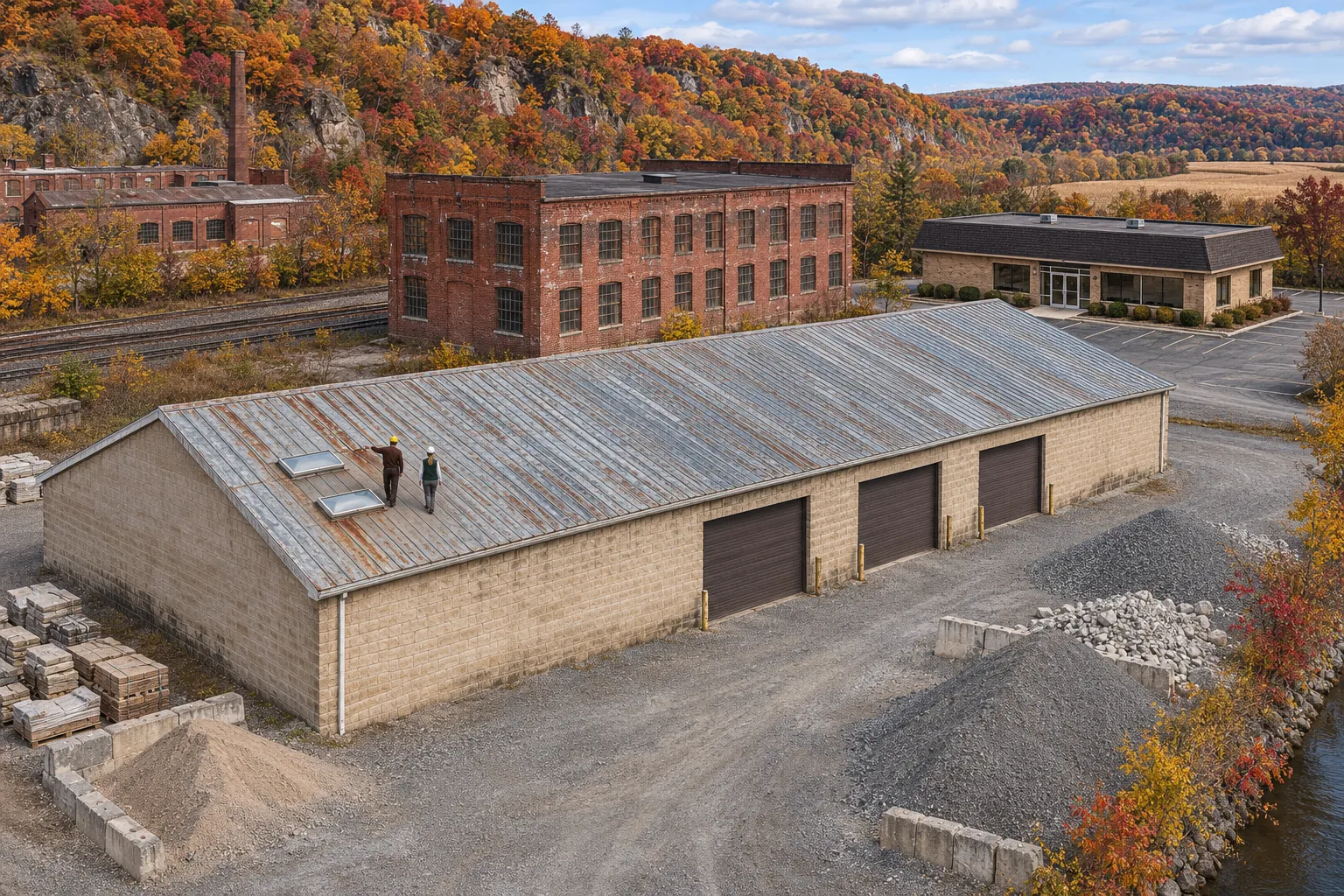
Question about your own roof?
Call UsIt can, on a narrow set of roofs. Shingles that still lie flat, hold their granules, and drain well can take a coating that both product makers support. On older or brittle shingles, coating covers a covering that is already failing.
Start with written compatibility. We read the shingle and coating guidance and look at the existing shingles, flashing, and ventilation together. Products designed for metal or membranes get no assumption of fit, and a failing assembly needs repair work that coating leaves undone.
Brittle shingles stay brittle under a coating. We check cracks, granule loss, and moisture underneath to decide what needs repair or replacement. Where the products do allow coating, the remaining roof condition sets how useful it is, rather than any promised extra life.
Only after the repairs and shingles are checked for condition and compatibility. We inspect the shingles and flashing and look for explicit product guidance. An old patch gives no proof that a new treatment suits it, especially where ventilation or deterioration problems continue underneath.
Mansards sit nearly upright, so water runs off fast but wind and sun hit them hard. We check fastening along each course, the flashing where the mansard meets the flat roof behind it, and the trim at its bottom edge before choosing any coating.
When the shingles qualify, a coating usually costs less than new shingles. Repairs to flashing and tabs, primer, product choice, and roof size all move the figure, and we compare both paths after the walk.
Tell us about the shingle section and any leaks. We check the shingles and the product guidance before recommending coating, repair, or replacement.