
If Your Roof
Panels Hold Tight and Rust Brushes Off
Surface scale over firm steel cleans up with wire brushes, so primer and two coats go straight on after screw work.
Start WithCommercial Metal Roof Coating
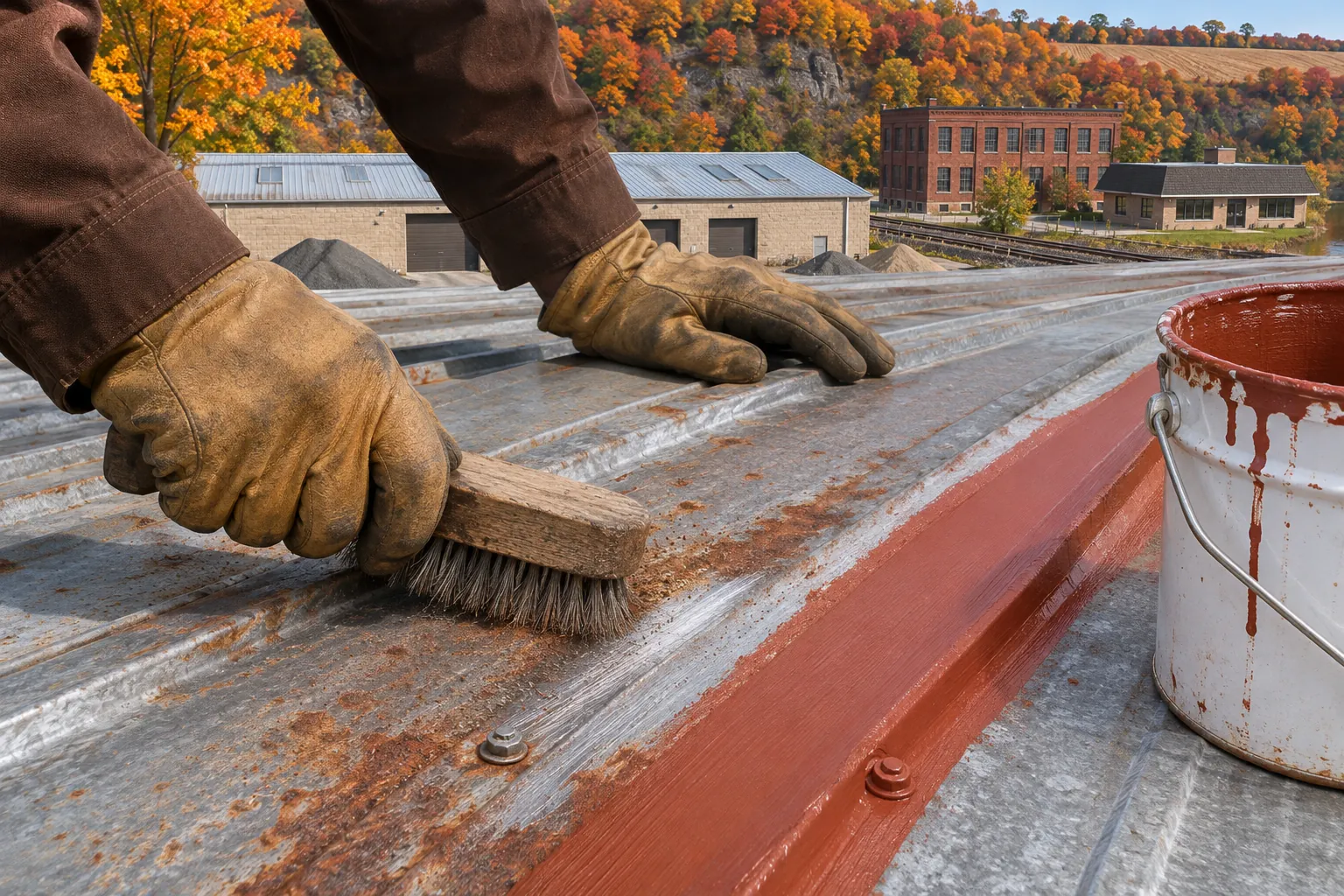
Easton commercial metal roof coating begins with the screws. We replace failed fasteners, stitch open laps, prime rust, and then coat every panel.
Easton commercial metal roof coating fits panels that still hold to the purlins. These four roofs show where we start.
Surface scale over firm steel cleans up with wire brushes, so primer and two coats go straight on after screw work.
Oversized fasteners grab fresh steel around the old hole and stop the movement that splits coatings.
Ponding beside equipment points to drainage work and a coating rated for standing water.
Widespread rust-through or failing purlins means new metal comes before any coating plan.
Water gets into metal roofs at a few predictable places. Each of these is repaired before the first coat goes down.
Screws that still move under foot keep working after they are coated, and the film splits around them within a season.
Loose screws come out, larger ones go in, and each head gets sealant once the connection is tight.
Hail can crack old coating at ribs and loosen laps and flashing even where panels show no holes.
Impact areas get a close look at seams, attachment, and curbs, and functional damage is repaired before we coat.
Seasonal expansion lifts side laps slightly, and wind-driven rain follows the gap to the purlins.
Stitch screws pull laps together, then seam tape or mastic closes the joint under the coating.
Overlapping panel ends hold moisture between them long after the field has dried.
End laps are opened up where needed, brushed, primed, and sealed before coating crosses them.
Movement and service traffic crack curb flashing well before the panels around it fail.
Curb and penetration flashing is rebuilt so the coating ties into a sealed base.
These are the builds we choose between on commercial metal roofs in Easton.
| Option | Goes Over | Build | Plan Around |
|---|---|---|---|
| Acrylic metal system | Sloped panels with quick runoff | Primer, base coat, white topcoat | Warm, dry days for curing |
| Silicone over metal | Low-slope panels near equipment | Primer and one or two thick coats | Later repairs use silicone |
| Rust primer and topcoat | Scattered rust over firm steel | Spot primer, full topcoat | Primer matched to the topcoat |
| Seam and fastener work only | Firm panels leaking at details | Sealant, tape, and new screws | Field left uncoated for now |
The same metal roof, one detail at a time, before the work and after it.
Tell us how the panels look and where water shows up inside. A roof walk sorts screw problems from panel problems.
Five steps on every metal roof, with repairs ahead of the first coat.
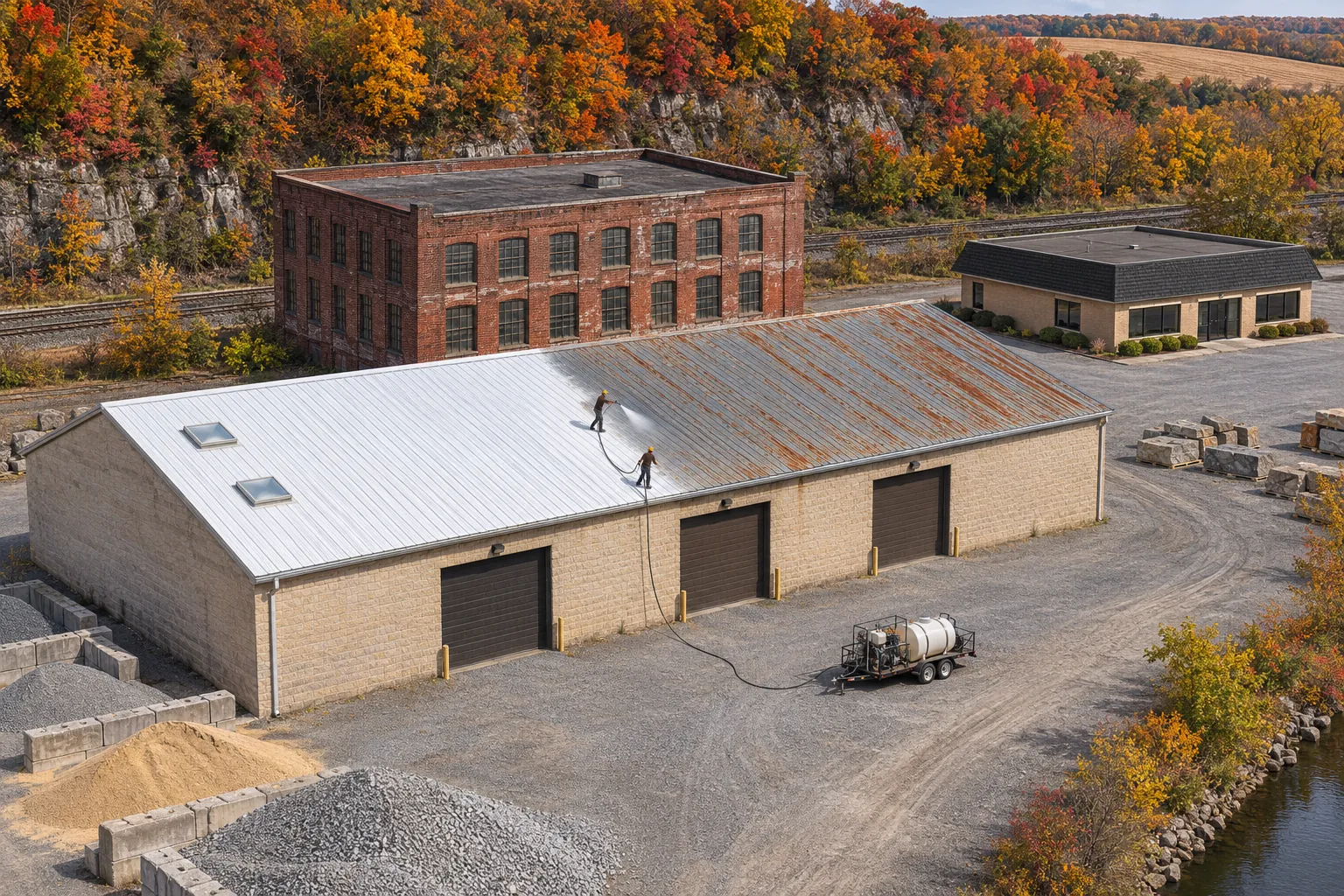
Each panel run gets walked and marked for loose screws, open laps, rust, and cracked flashing. We check inside too, so condensation on cold steel never gets blamed on the roof.
Failed fasteners come out and larger ones go in. Loose laps take stitch screws, and any panel rusted through is cut out and replaced.
Pressure washing strips chalk, dirt, and oil. Rusted areas get brushed to firm steel and primed, then the roof dries out completely.
Laps, curbs, and pipe boots get sealant or reinforced seam treatment on their own pass, since they carry most of the leak risk.
Base and top coats go on at the thickness the data sheet calls for. Wet-film readings are taken across the roof as the crew works.
Some roofs mix metal with flat or shingle sections. These systems cover the rest of the building.
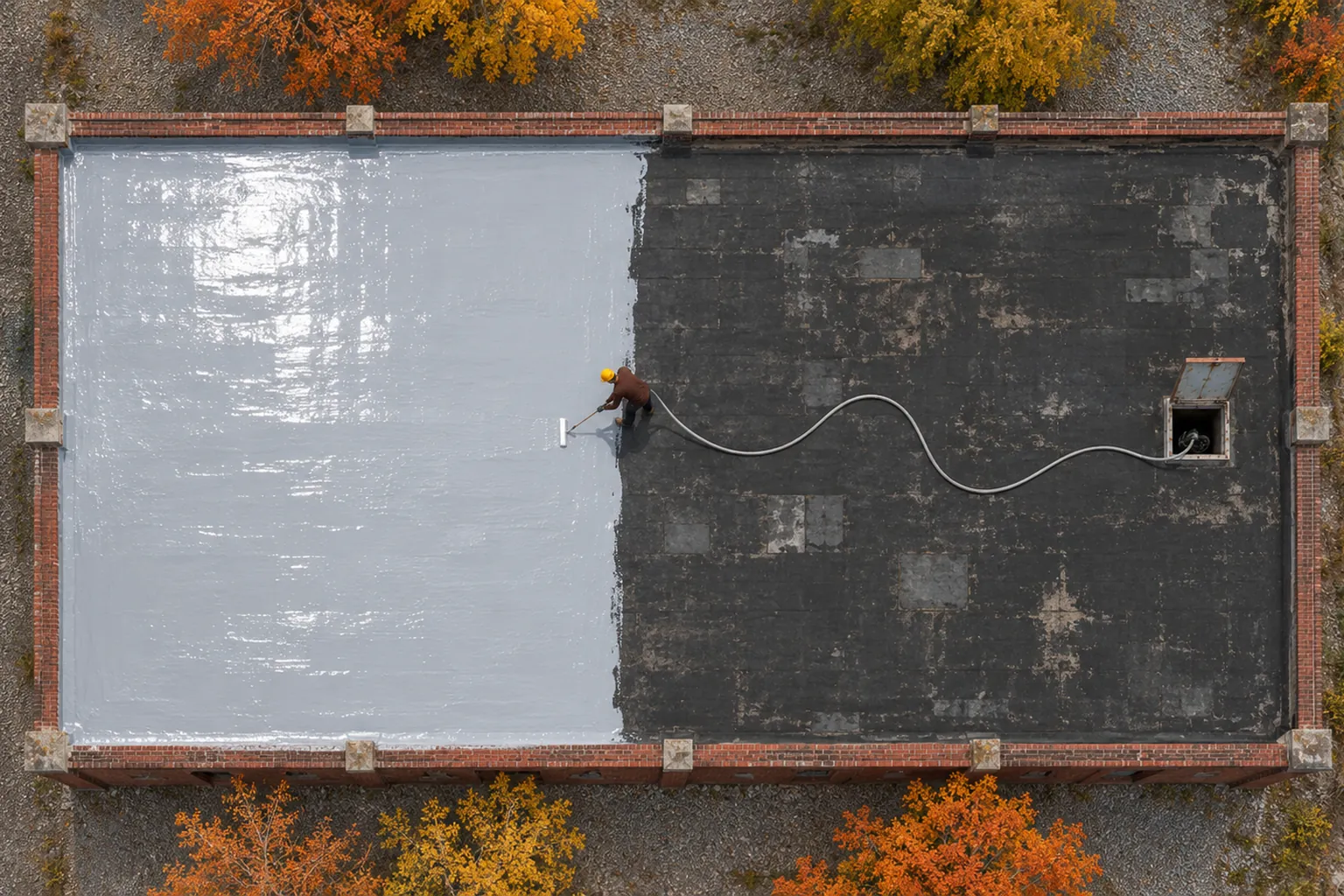
Moisture-tolerant coating for low-slope roofs after drainage checks.
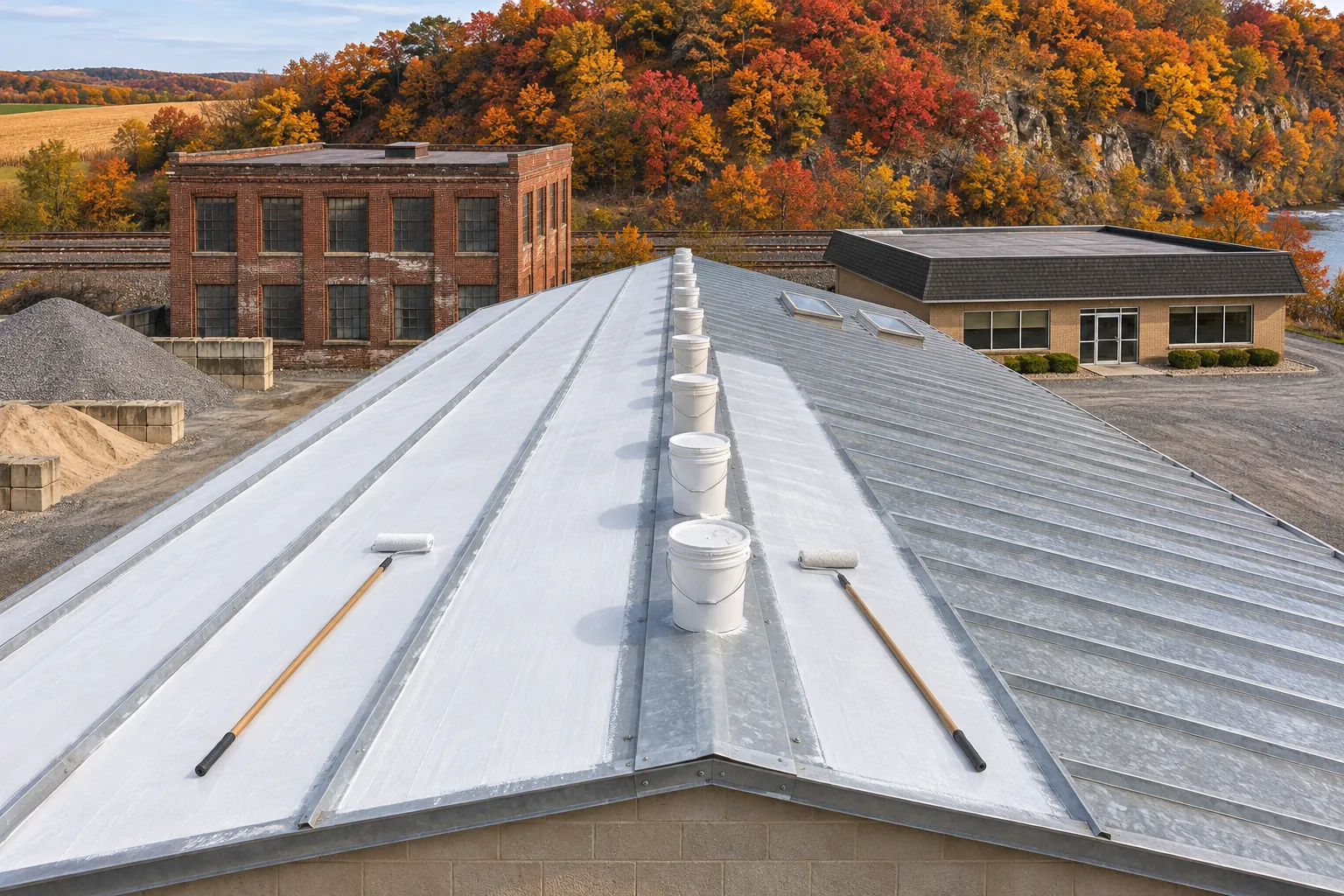
Water-based coats for sloped panels in warm, dry windows.
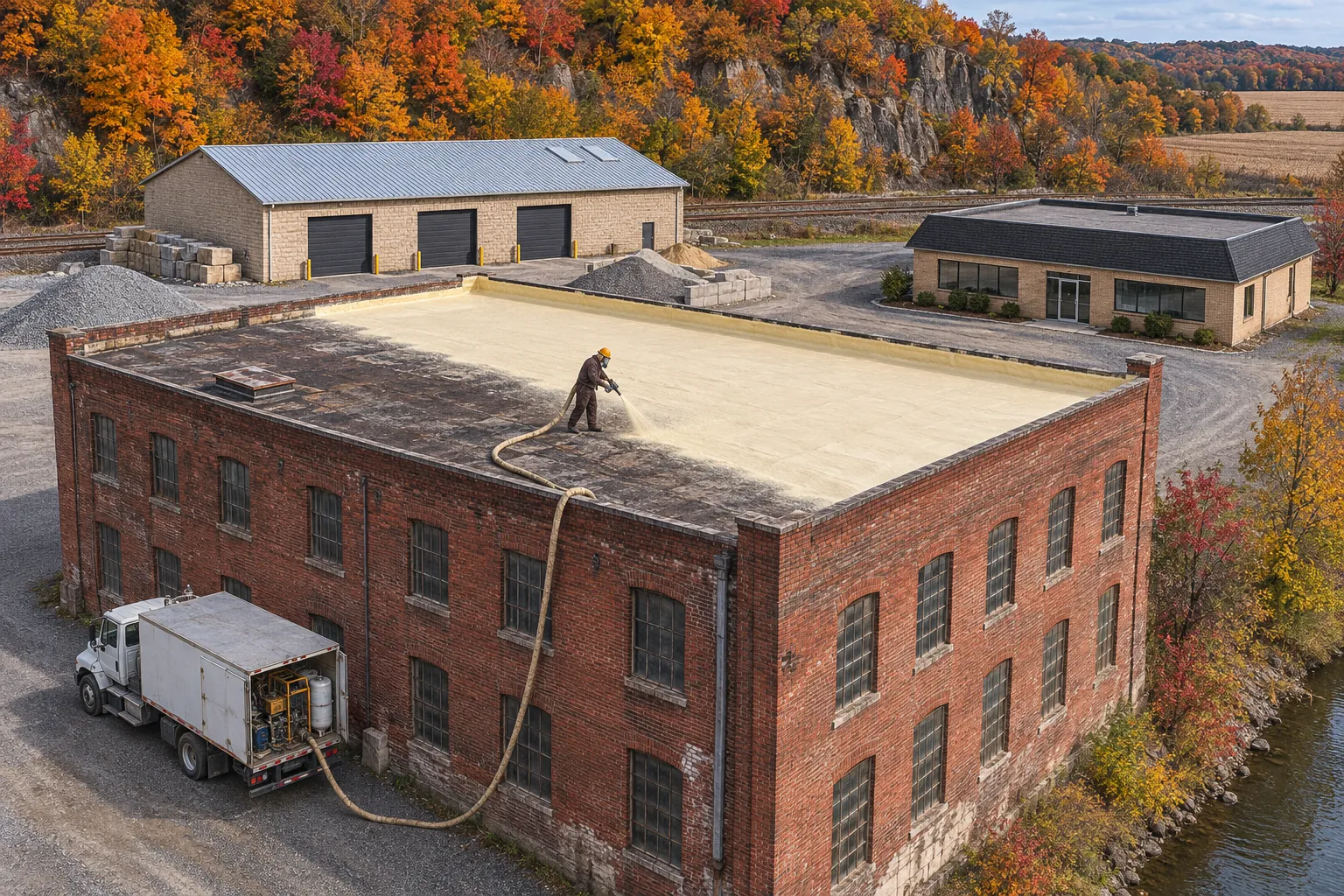
Insulating foam and a topcoat over a dry, attached deck.
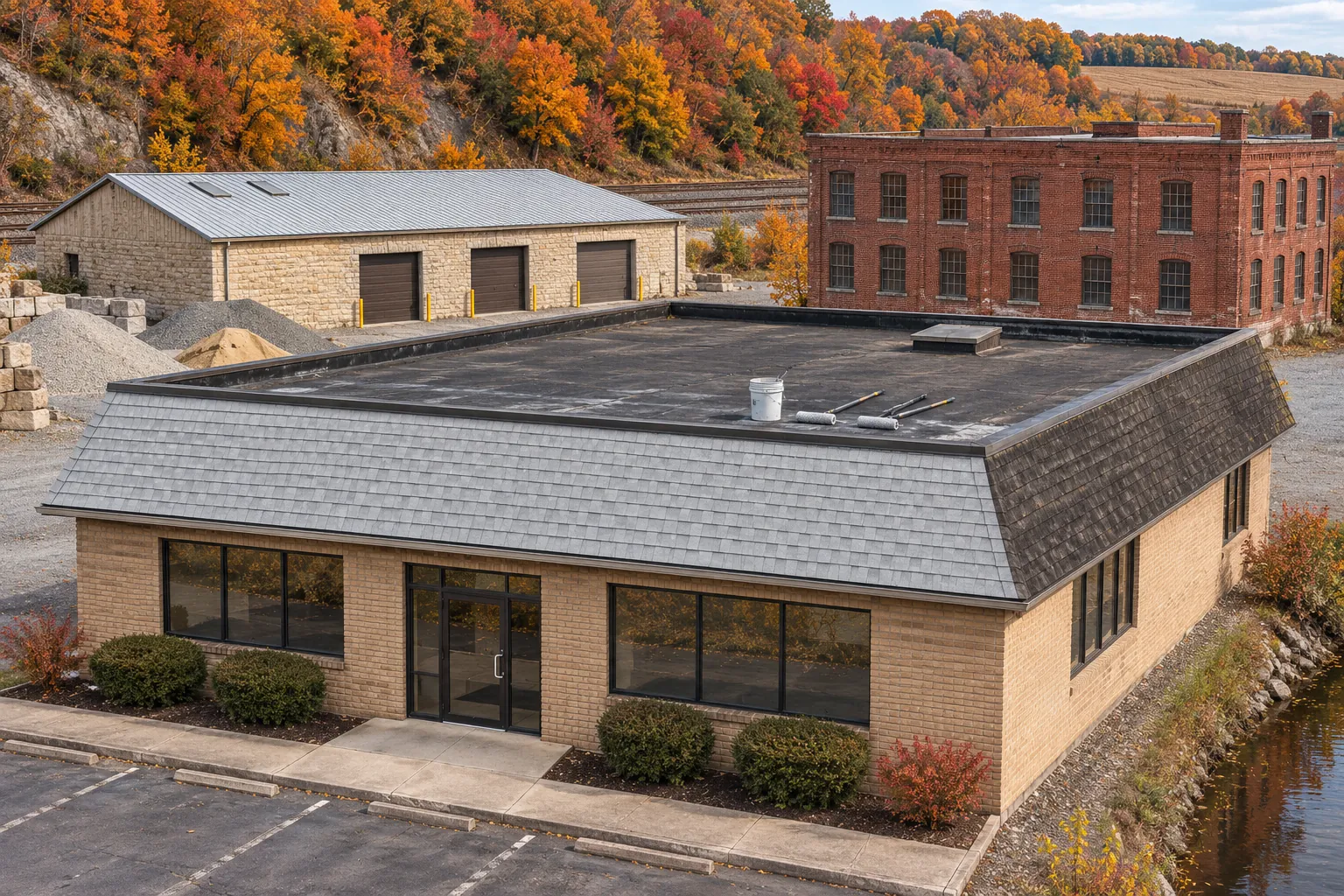
Coating for commercial shingles only where the products allow it.
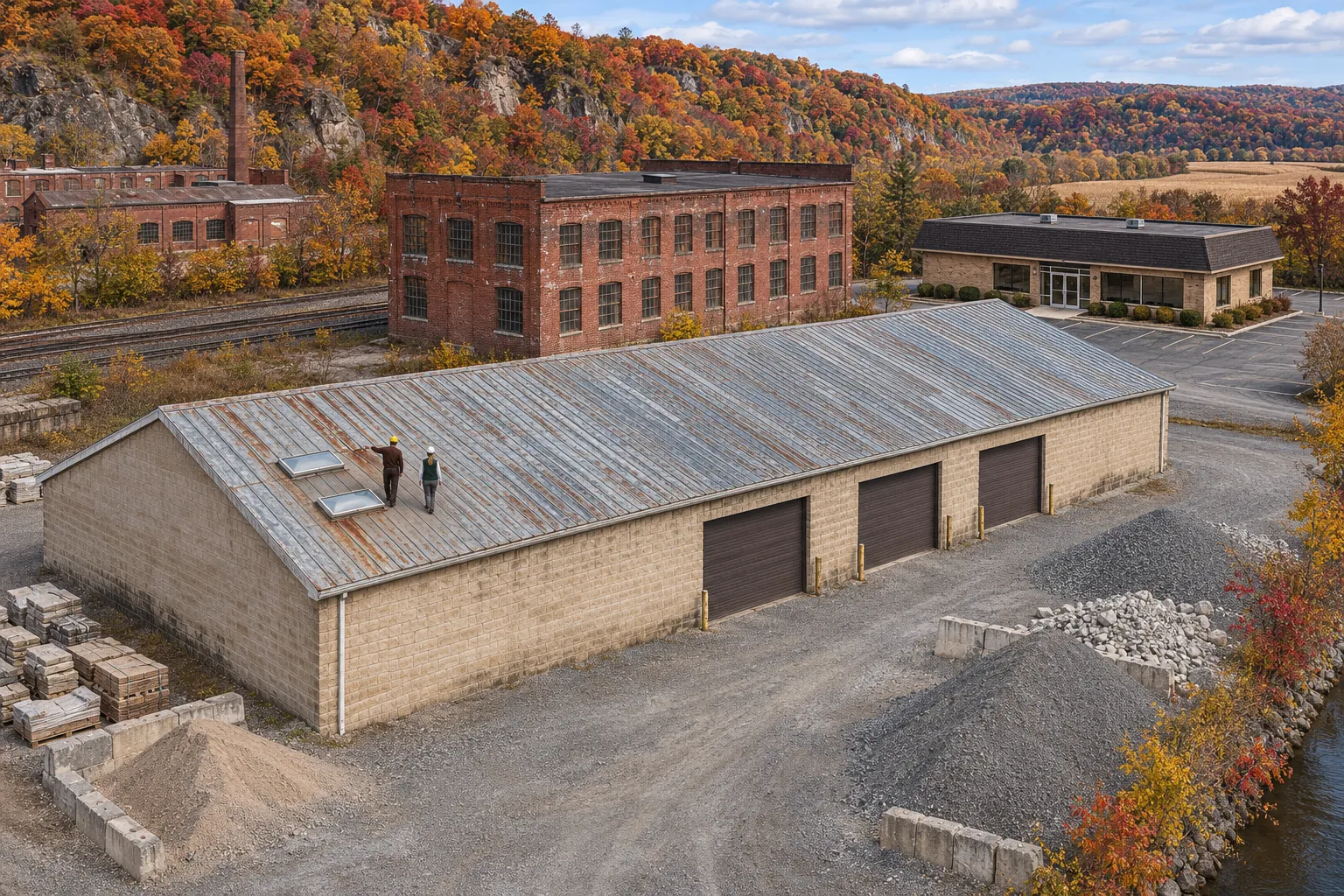
Question about your own roof?
Call UsNo single coating wins on every roof. Life comes from the match between the product, the drainage, and the metal under it, plus correct film thickness. Preparation carries as much weight as chemistry, because rusted steel or loose screws left under the film shorten its life whatever the label says.
For planning, coating runs about $2.50 to $4.00 per square foot of roof, and replacement about $5 to $8. Your number moves with roof size, access, rust and seam prep, how many screws need sealing, the coating type and thickness, the coat count, and the penetrations and flashing to rebuild.
It does. A roof with a few thousand loose or stripped screws takes more labor and material than one needing only a sealant cap on each head. Loose attachment has to be fixed before its seal is covered, so we count that work into the scope rather than leave it for later.
Yes. Hail can lift laps, crack flashing, and loosen fasteners without punching through steel. We look over impact areas and any new interior leaks, repair what affects how the roof works, and treat cosmetic dents separately, since dents alone say little about whether the roof can take a coating.
In most buildings, yes. Sections are scheduled around shifts, docks, and stored goods, and coating near air intakes is rolled or done while units are briefly off. Repairs that open a panel are timed with protection set up below that spot.
Tell us about the panels, the leaks, and the building. We walk the roof, mark the repairs, and lay out the coating plan in plain terms.