
If Your Roof
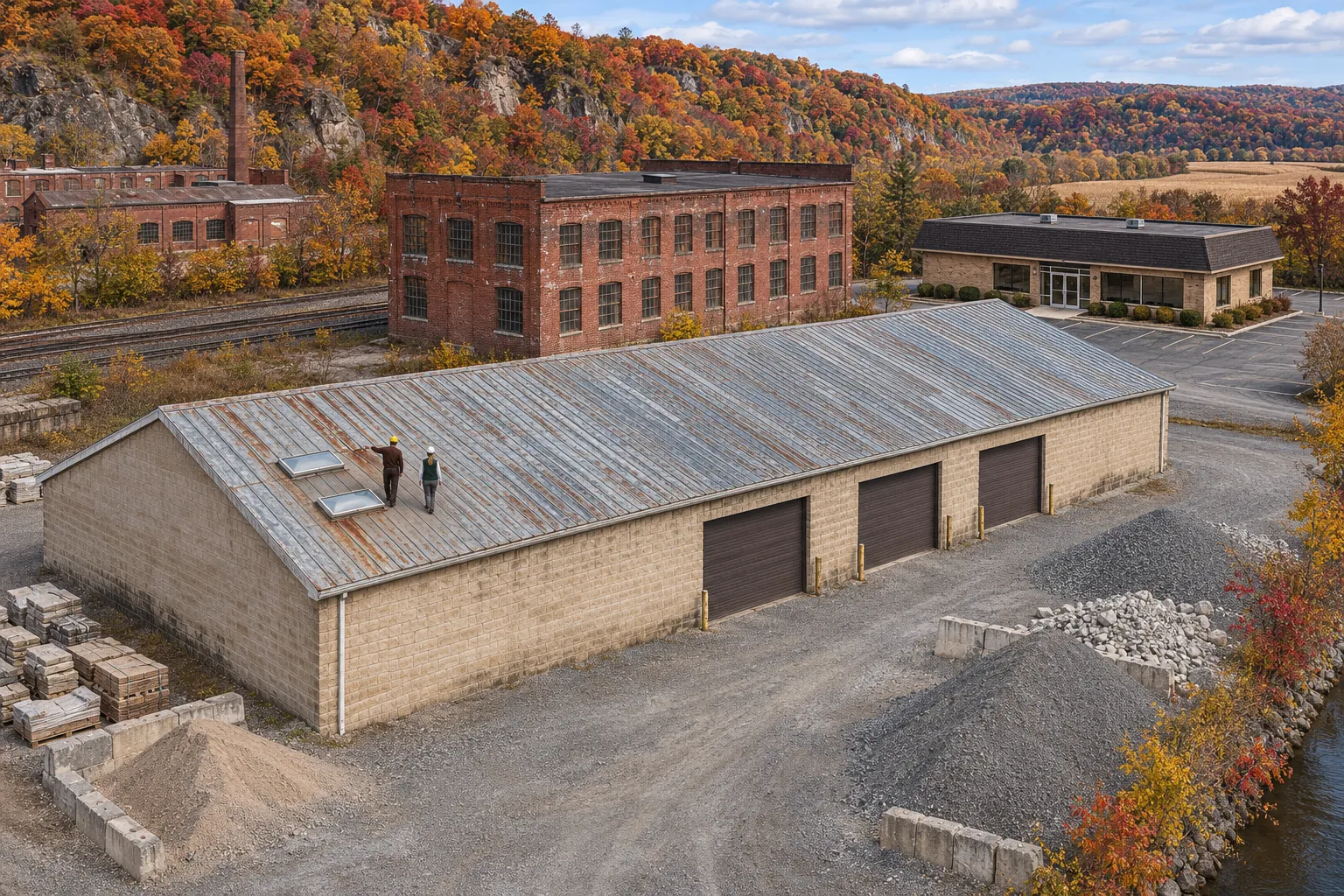
Sloped Panels Drain Within Minutes
Water leaves ribbed metal quickly, which suits a water-based coating that cures in dry air.
Start WithAcrylic Roof Coating
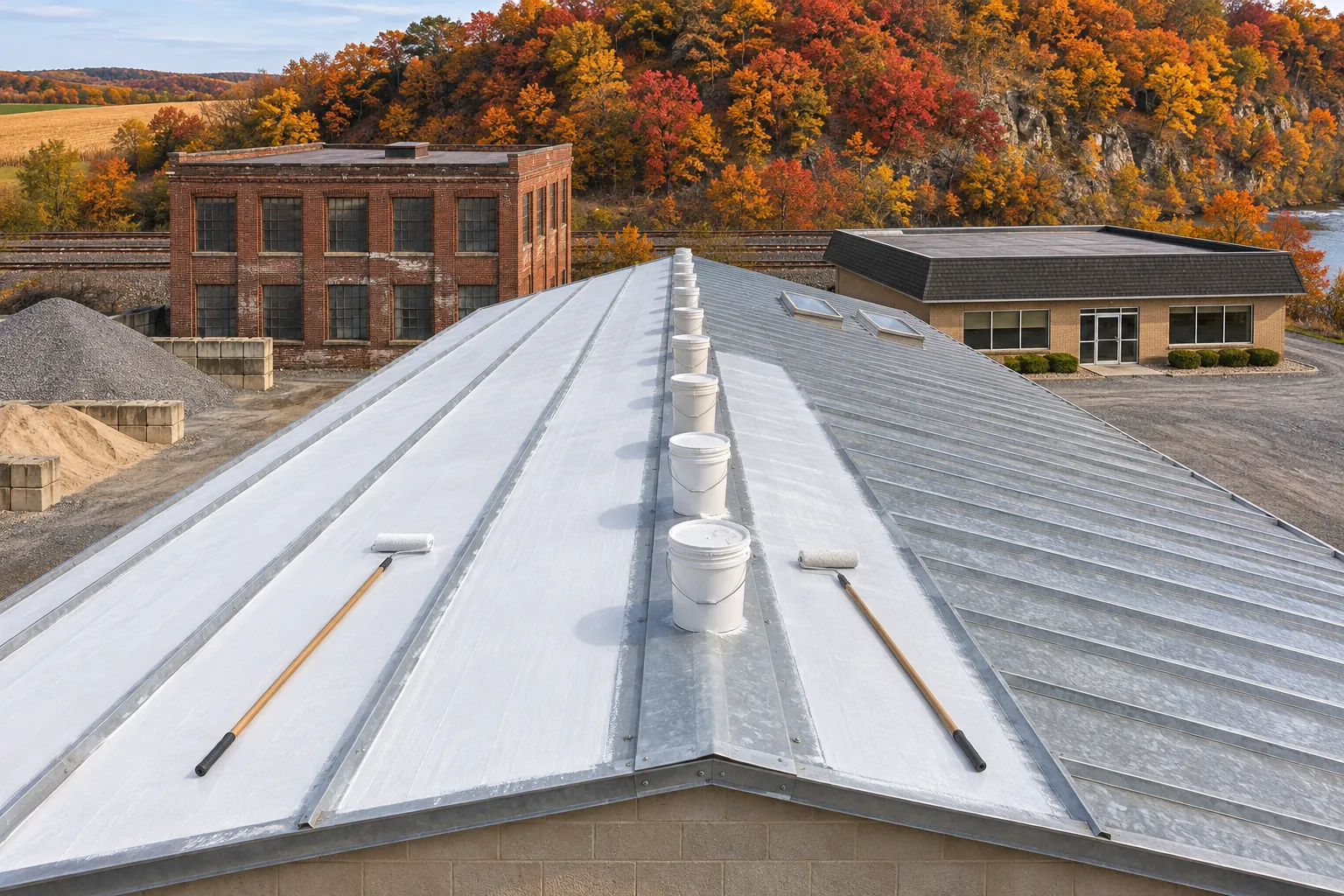
Easton acrylic roof coating fits sloped metal that drains quickly. We plan the coats for warm, dry stretches and reinforce every seam first.
Easton acrylic roof coating needs a roof that drains and a dry stretch of weather. These four roofs show where we begin.
Water leaves ribbed metal quickly, which suits a water-based coating that cures in dry air.
Those details get repaired and reinforced with fabric before the acrylic base coat.
Acrylic softens under standing water, so those areas need a coating made for ponding.
Metal that has lost its strength needs new panels before any finish can protect it.
Acrylic is water-based, so the roof and the forecast both have to be ready.
Cool nights and heavy dew in spring and fall cut the drying window short, even after a warm afternoon.
We follow the product limits for the whole application period and the next night, including shaded parts of the roof.
Humidity and low temperatures slow curing, and rain on a fresh coat can wash it off.
Coats are scheduled into dry stretches with enough time between them to firm up before dew falls.
Panel joints flex every day as the steel warms and cools.
Fabric set in acrylic at laps and ridge caps gives the coating strength where movement concentrates.
Untreated rust stains light topcoats within a season.
Rust gets brushed and primed with a product matched to the acrylic before the base coat.
Technicians crossing the roof scuff and tear thin film.
Walk paths get marked and built up so service trips leave the coating intact.
These acrylic builds cover most sloped metal roofs we coat near Easton.
| Option | Goes Over | Build | Plan Around |
|---|---|---|---|
| Two-coat acrylic | Firm panels with light rust | Base coat and white topcoat | Dry, warm application days |
| Acrylic with fabric at seams | Roofs with moving laps | Fabric in base coat, then topcoat | Extra detail time |
| Rust primer plus acrylic | Panels with spot rust | Primer, base coat, topcoat | Primer cure before coating |
| Maintenance recoat | Older acrylic still bonded | Wash and one new coat | Adhesion test first |
A sloped metal roof before acrylic work and after it, side by side.
Acrylic needs dry weather, so the schedule matters. Call now and the roof walk and repairs can be done before the window opens.
Five steps, with the forecast checked before each coat.
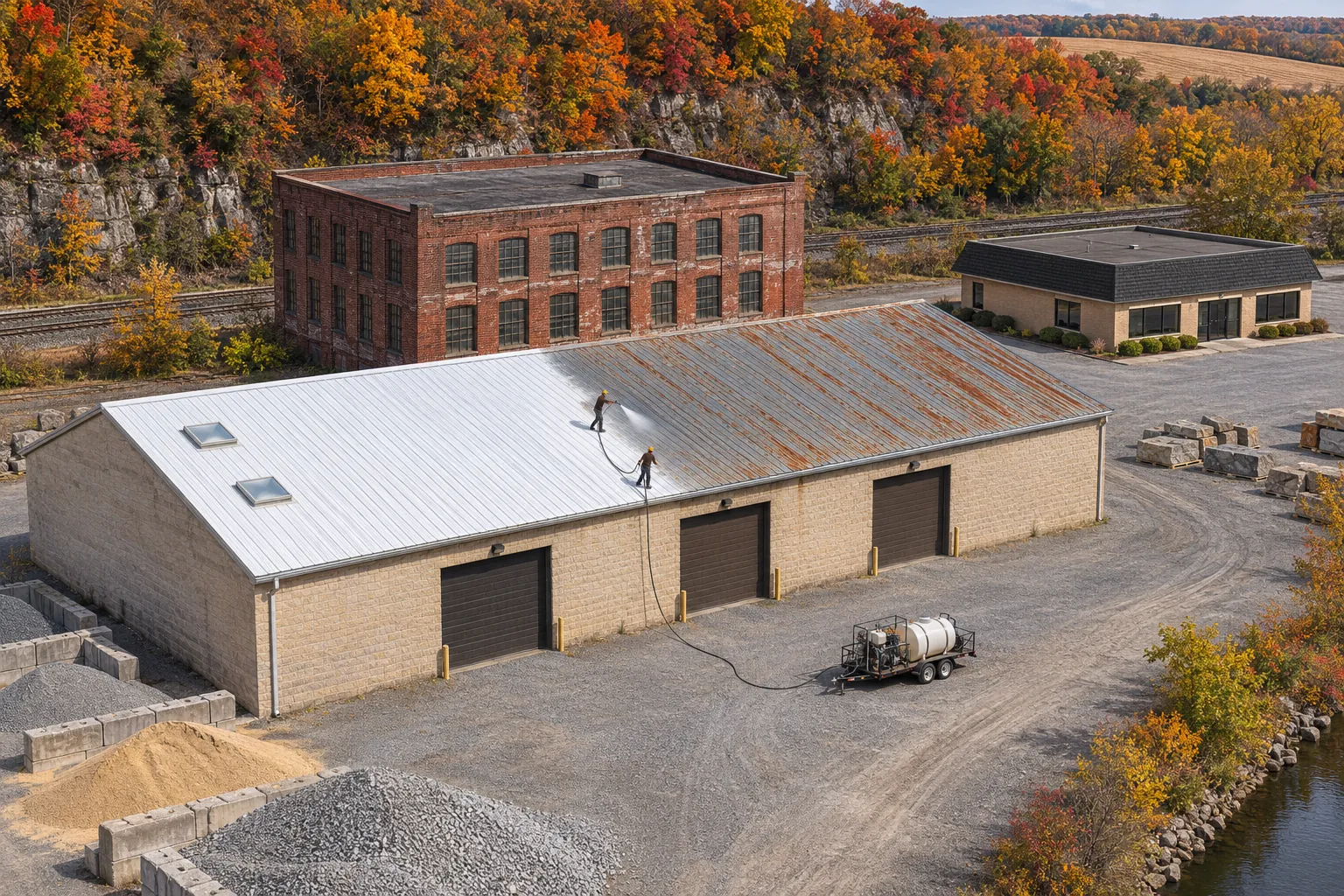
Rust, laps, screws, and old paint get marked panel by panel, and adhesion is tested wherever earlier coatings remain on the ribs.
Loose screws are replaced, failed panels are swapped out, and rust is brushed back to firm metal.
Panels are washed and dried. Primer goes on rusted areas and on any surface the product sheet calls out.
Laps, ridge caps, and curbs get fabric embedded in a base coat so the joints can flex.
Two coats go on during dry weather, with coverage checked along the raised ribs where film tends to run thin.
When part of the building is flat or shingled, one of these systems usually covers it.
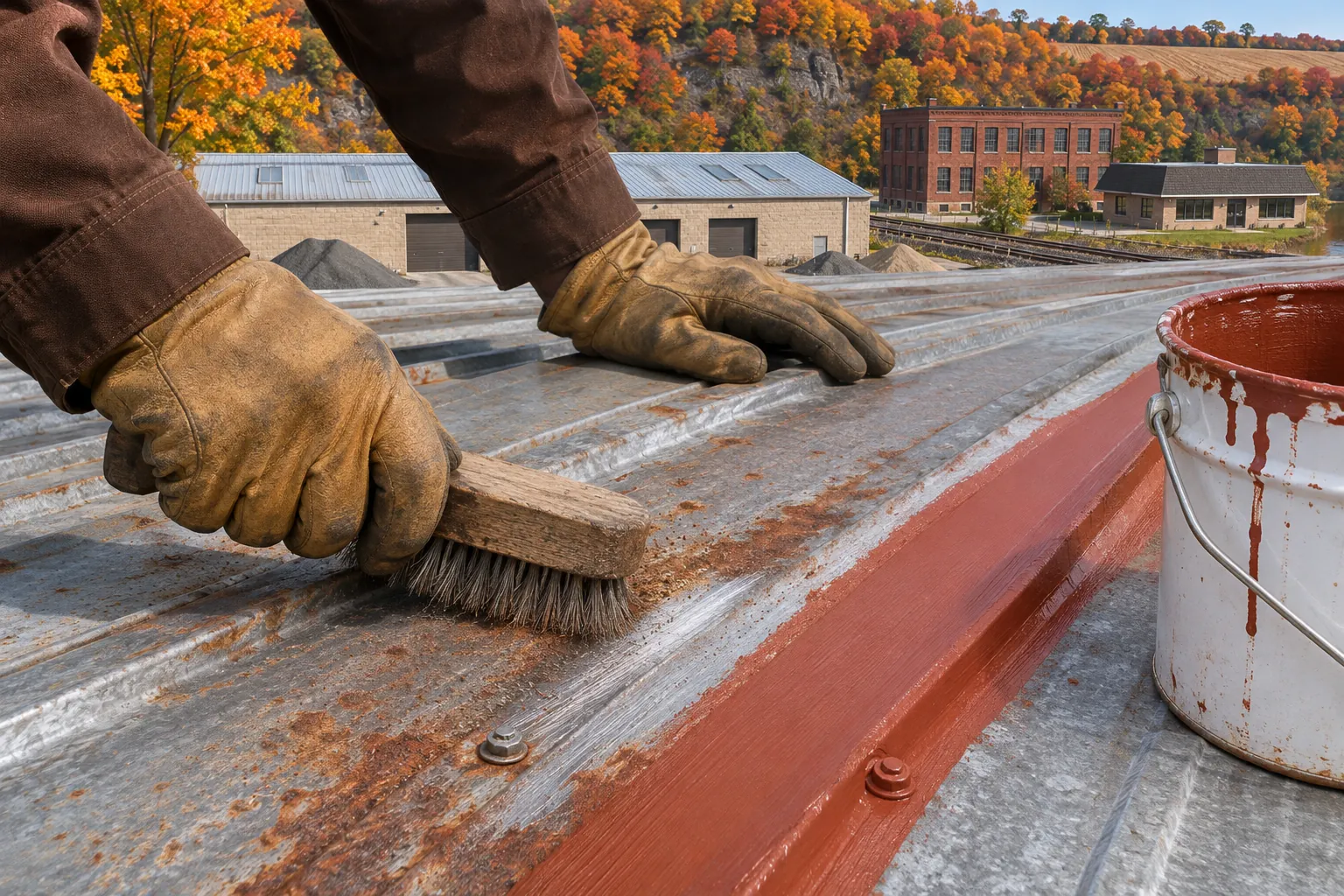
Screws sealed, laps stitched, rust primed, then two full coats.
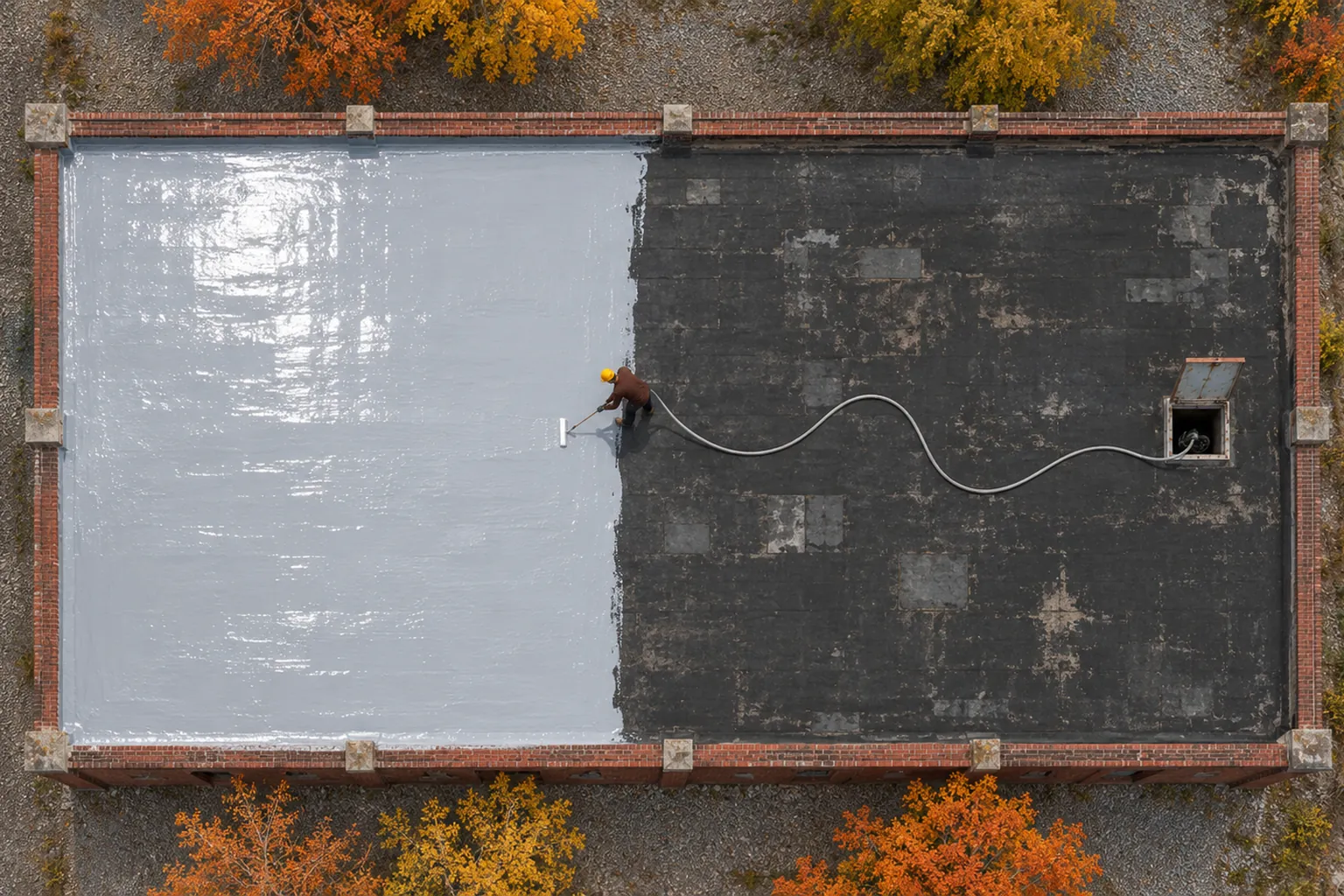
Moisture-tolerant coating for low-slope roofs after drainage checks.
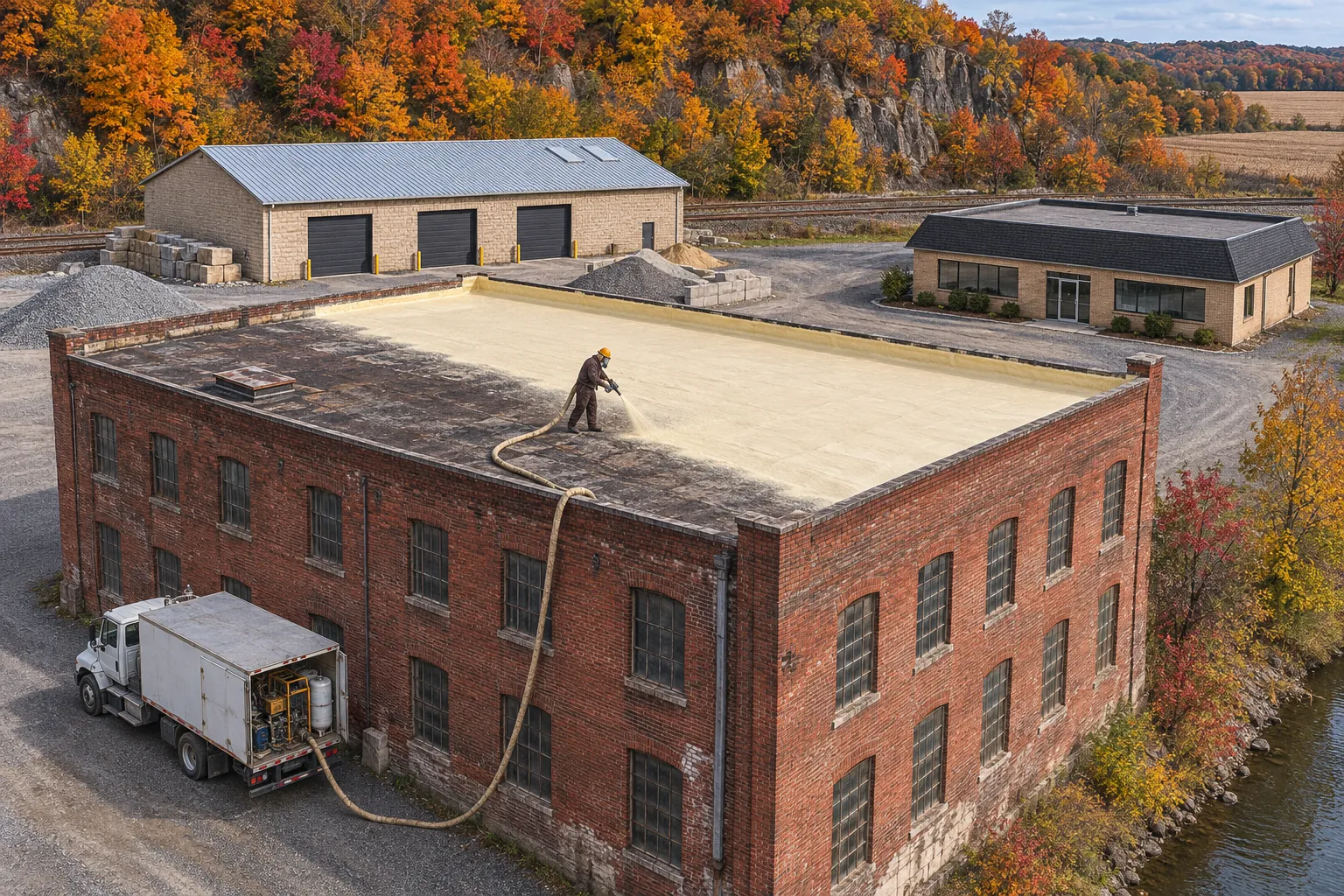
Insulating foam and a topcoat over a dry, attached deck.
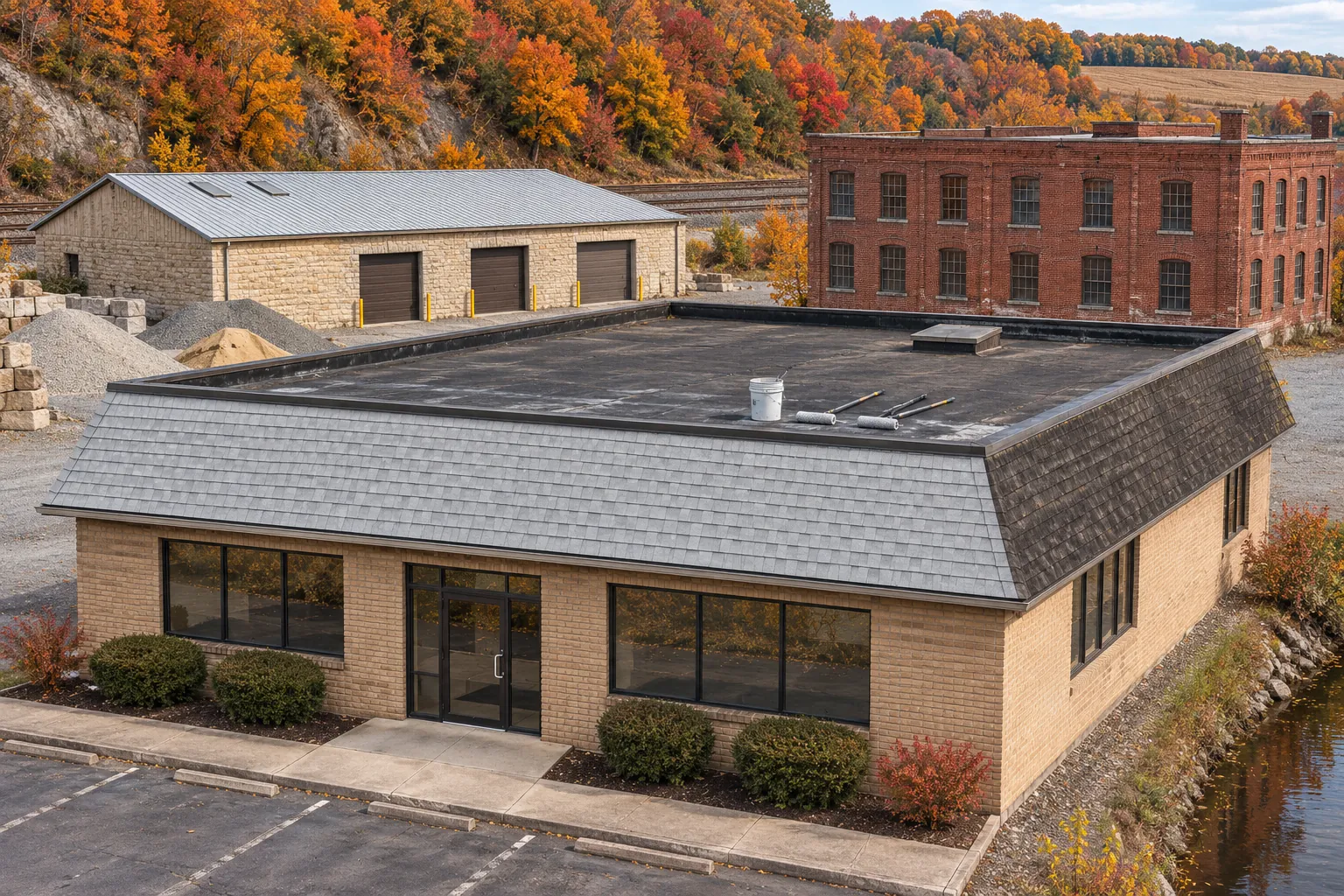
Coating for commercial shingles only where the products allow it.
Question about your own roof?
Call UsIt does when the metal, drainage, and weather suit it. Acrylic protects sloped panels well, bonds to primed steel, and recoats easily. Raised ribs need careful coverage, and areas damaged by traffic or movement need maintenance over the years, so the roof still gets checked after each winter.
Cure depends on temperature, humidity, and air movement. A coat can feel dry within hours yet stay soft underneath, and dew or rain on that soft film can wash it off. We follow the product limits for the whole period, including the first night.
Yes. Cool temperatures, humidity, and overnight dew in spring and fall can leave too little time for acrylic to dry. A warm part of the day says little about shaded panels or the next night, so we plan each coat around the full forecast.
Budget about $2.50 to $4.00 per square foot of roof for coating, and about $5 to $8 for replacement. The real figure follows the roof size, access, rust and seam work, fastener sealing, coating thickness and coats, and the penetrations and flashing that need attention.
Yes, when the old acrylic still grips. We wash the roof, pull a few adhesion tests, and spot-prime any bare steel. A maintenance coat over a firm acrylic finish is one of the easier recoats on a metal roof.
Acrylic is water-based, cures in dry air, and accepts new acrylic coats easily, but it softens under standing water. Silicone handles ponding and weather well, yet only silicone sticks to it later. Slope and drainage usually make the choice clear.
Tell us about the slope, the rust, and your schedule. We plan the repairs and time the acrylic coats for dry weather.